
The Challenges of Digital Signage Implementation in Emerging Markets
(UAE, India & the Middle East)
Digital signage has become a powerful communication and marketing tool across retail, corporate, education, healthcare, hospitality, and government sectors. In emerging markets like the UAE, India, and the wider Middle East, the demand for digital signage displays, interactive flat panels, LED screens, and smart display solutions is growing rapidly.
However, implementing digital signage in these regions comes with unique challenges. Understanding these challenges helps businesses plan better, reduce risks, and maximize return on investment (ROI).
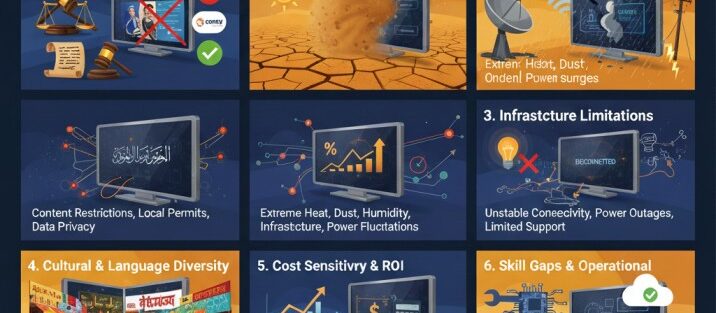
1. Regulatory and Compliance Challenges
One of the first hurdles in digital signage implementation is regulatory compliance. Countries in the Middle East and India have specific rules related to advertising content, public displays, data privacy, and installation permissions.
In the UAE, content regulations are strict. Digital signage content must align with cultural values, government guidelines, and advertising laws. Unauthorized messaging, political content, or culturally insensitive visuals can lead to penalties or removal of displays.
In India, regulations vary by state and municipality. Permissions may be required for outdoor digital signage, LED video walls, and public display installations. Power usage norms and local authority approvals can also impact project timelines.
For businesses, this means choosing compliant digital signage solutions, working with experienced providers, and using content management systems (CMS) that allow easy content control and approvals.
2. Climate and Environmental Conditions
Climate is a major challenge in emerging markets, especially in the Middle East. High temperatures, direct sunlight, humidity, and dust can severely affect digital signage performance.
Outdoor digital signage in the UAE and Gulf countries must withstand:
- Extreme heat
- High UV exposure
- Sand and dust storms
- Humidity in coastal regions
In India, challenges include:
- High humidity and monsoon conditions
- Power fluctuations
- Dust and pollution in urban areas
Using commercial-grade digital signage displays, high-brightness panels, proper ventilation, and industrial-quality enclosures is critical. Brands that invest in durable, climate-resistant digital signage hardware experience fewer failures and lower maintenance costs.
3. Infrastructure Limitations
Infrastructure readiness varies widely across emerging markets. While major cities in the UAE are technologically advanced, some regions in India and the Middle East still face connectivity and power reliability issues.
Common infrastructure challenges include:
- Unstable internet connectivity
- Power outages or voltage fluctuations
- Limited technical support in remote locations
Digital signage systems often depend on cloud-based CMS, remote content updates, and real-time data integration. In such environments, offline content playback, local storage support, and robust power management become essential features.
Choosing digital signage solutions that can operate reliably even with limited connectivity ensures uninterrupted communication.
4. Cultural and Language Diversity
Culture plays a crucial role in digital signage success. The UAE and Middle East are home to highly diverse populations with multiple languages, traditions, and expectations.
Effective digital signage must consider:
- Multilingual content (Arabic, English, Hindi, etc.)
- Cultural sensitivity in visuals and messaging
- Regional preferences in design and communication style
In India, content that works in one state may not resonate in another due to linguistic and cultural differences. Businesses must adopt localized digital signage content strategies to engage their target audience effectively.
Using interactive flat panels and dynamic content scheduling allows organizations to tailor messages based on location, time, and audience demographics.
5. Cost Sensitivity and ROI Expectations
Budget constraints are a common concern in emerging markets. While organizations want advanced digital signage solutions, they also expect quick returns.
Challenges include:
- High initial investment in hardware
- Installation and maintenance costs
- Content creation expenses
To address this, businesses should focus on scalable digital signage solutions that allow phased expansion. Energy-efficient displays, centralized content management, and long-life commercial panels help reduce long-term costs.
Clear performance metrics such as increased footfall, better engagement, and improved communication help justify investment.
6. Skill Gaps and Operational Challenges
Operating and maintaining digital signage requires technical knowledge. In some regions, there may be limited access to trained professionals for installation, troubleshooting, and content management.
User-friendly CMS platforms, remote monitoring, and strong after-sales support are essential. Businesses benefit greatly from partnering with brands that offer end-to-end digital signage solutions, including training and technical assistance.
Conclusion
Despite these challenges, digital signage implementation in the UAE, India, and the Middle East offers enormous opportunities. With the right strategy, durable hardware, localized content, and reliable technology partners, businesses can overcome regulatory, climate, infrastructure, and cultural barriers.
At Hynits, we understand the unique demands of emerging markets. Our commercial digital signage displays, interactive flat panels, and smart display solutions are designed to perform reliably in challenging environments while delivering powerful visual communication.
Digital signage is not just about screens—it’s about smart, compliant, and culturally relevant communication that drives real business impact.