
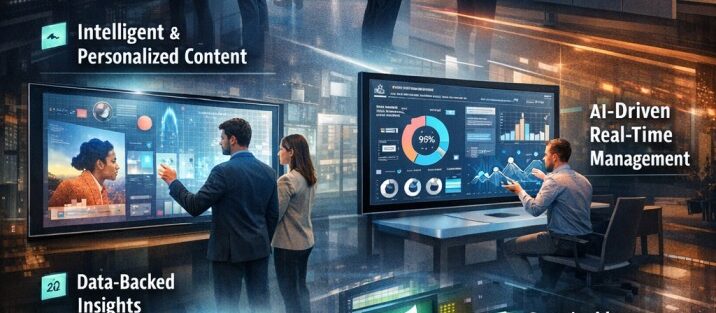
How AI & Smart Display Technology Are Changing Digital Communications in 2026
Digital communication in 2026 is no longer about simply showing content—it’s about understanding people, responding in real time, and creating immersive experiences. With the powerful combination of Artificial Intelligence (AI) and Smart Display Technology, businesses are transforming the way they connect with customers, employees, and the public.
From retail and education to corporate offices and public spaces, smart displays powered by AI are redefining communication standards worldwide.
Let’s explore how this shift is happening—and why it matters.
1. From Static Screens to Intelligent Communication
Traditional digital signage displayed the same content to everyone. In 2026, that model is outdated.
AI-powered smart displays can now:
Analyze audience behavior
Adapt content based on time, location, and demographics
Deliver personalized messages instantly
For example, a smart display in a shopping mall can promote different products in the morning versus the evening, or adjust messaging based on foot traffic. Communication is no longer passive—it’s context-aware and intelligent.
2. AI-Driven Personalization Is the New Standard
One of the biggest changes AI brings to digital communication is hyper-personalization.
Smart displays can now:
Detect age groups and viewing duration (without storing personal data)
Adjust language, visuals, and offers automatically
Recommend relevant content based on real-time interaction
In corporate environments, this means dashboards that change based on departments. In education, interactive panels adapt lessons based on student engagement. The result? Higher attention, better understanding, and stronger impact.
3. Interactive Displays Are Replacing One-Way Messaging
In 2026, people don’t want to just watch—they want to interact.
Smart interactive displays now support:
Touch, gesture, and voice interaction
Real-time collaboration
AI-powered assistants built into the screen
Whether it’s a smart classroom, a meeting room, or a showroom, displays are becoming communication hubs, not just screens. This two-way interaction builds trust, improves engagement, and enhances decision-making.
4. Real-Time Content Management with AI Automation
Managing digital content used to be time-consuming. AI has changed that completely.
With AI-enabled display systems, businesses can:
Auto-schedule content based on performance
Update multiple screens instantly from a central dashboard
Optimize content using engagement analytics
For distributors and enterprises, this means less manual work, faster updates, and consistent brand messaging across locations—whether it’s 5 screens or 500.
5. Smart Displays Are Driving Data-Backed Communication
In 2026, communication is no longer based on guesswork.
AI-powered displays provide insights such as:
Which content performs best
How long viewers engage
Peak interaction times
This data helps businesses refine messaging, improve ROI, and make smarter marketing decisions. Digital communication is now measurable, trackable, and continuously improving.
6. Sustainability Through Intelligent Display Technology
Another major shift is the role of AI in energy efficiency and sustainability.
Smart displays today:
Automatically adjust brightness based on ambient light
Power down when no audience is detected
Optimize usage to reduce energy consumption
This aligns perfectly with global sustainability goals while also reducing operational costs—making smart displays both eco-friendly and business-friendly.
7. The Future of Brand Communication Is Smart, Connected, and Human-Centric
In 2026, AI and smart display technology are not replacing human communication—they’re enhancing it.
Brands that adopt intelligent display solutions can:
Communicate faster and smarter
Create memorable customer experiences
Stay ahead in competitive markets
From digital signage and interactive panels to AI-powered display ecosystems, the future belongs to businesses that invest in smart, adaptive, and meaningful communication.
Final Thoughts
AI and smart display technology have transformed digital communication from static broadcasting into dynamic conversations. As we move further into 2026, organizations that embrace this evolution will lead in visibility, engagement, and trust.
Smart displays are no longer optional—they are the new language of digital communication.